

Group Training
Working closely with you I will design and deliver effective training that will make a real difference to your bottom line and the productivity of your sales and marketing teams. We will create a bespoke training courses tailored to your business, staff and market sector along with a company training pack/manual which can be provided for all attendees, which can be used as a reference tool and to help induct new employees.
There are 2 types of training programs available:
Open Workshops – these are hosted and promoted by 3rd parties such as the Chamber of Commerce, BNI, and other membership organisations. Prices, locations and durations vary however check the calendar for availability.
In-house Training – There are 3 different in-house training programs available, which ensure we have something to suit everyone’s needs and budget.
Lite – 2 Week Program click to download overview – £2,150 + £10pp for books
2.5 hour Interactive Workshop delivered on-site, with 30 minute Live Call Clinic, Plus a 45 minute group follow up video call (1-2 weeks later) to check progress and …. Click to download overview
4 Week Group Training Program click to download overview – £3,450 + £39.50 for training materials
This 4 stage training program is designed to enhance your team’s style, ad giving them more control over their call. Tracking their progress and offering addition support over a 4-6 weeks period and includes… Click to download overview
12 Week International Training Program click to download overview – £9,450 + £32.50 for all training materials
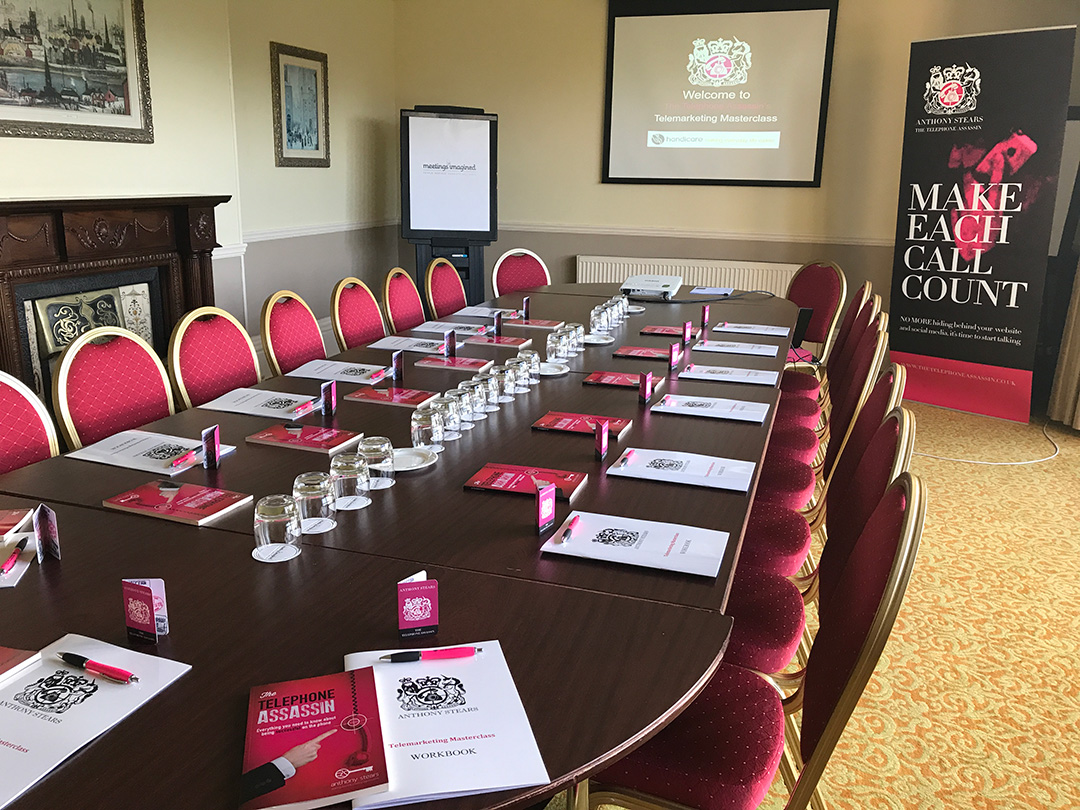
This program includes 2 separate visits to your offices, delivering a complete Telemarketing Masterclass, interactive team session and ‘Call Clinics’, plus multiple group follow up calls, webinars and addition coaching and support time. Typically spread over 12 weeks ….
The 3 month program is the ideal for most clients as this gives a long lasting change in behaviours, and helps to stop people going back to their old ways. This is more than enough time to,
-
Fully understand the issues your team face when speaking with people on the phone
-
Deliver a complete Telemarketing Masterclass onsite, and run a Call Clinic where we’ll hit the phones straight after to put things into practice.
-
Weekly follow up calls to continue teams development and tackle new obstacles/objections
-
2 webinars to tackle specific topics (…of your choice) and advanced techniques
-
Revisit to your office to deliver refresher and advance sessions to those that need it, and run additional call clinics and coaching.
-
Monthly debriefing to make sure KPI’s are improving, and tracking your Return on Investment
For more information about which training program could work for you and your team, please get in touch. Topics covered in a Telemarketing Masterclass usually include:
Call Structures – Objectives and techniques
Perfecting your Pitch – Preparation and the importance of Profiling
Self-motivation – For telemarketers, field reps and home-workers
Objection Handling – How to get round them or stop them from coming up
Building rapport over the phone – Standing out and being remembered
Using social media to improve results
CRM explained – 3 FREE systems you can start using right away
The “art” to a perfect follow up call – Building a pipeline and qualifying your leads.

For more info, give me a call on 07887 798033 or complete the enquiry form.
SUBSCRIBE TO IMPROVE
Everyone is different, we all have our own issues and some people need more help than others so here’s how you can get my help and support
